

From a Regency dandy to boardrooms everywhere — how the men's suit actually got here, and where it still matters most.
To me, Beau Brummell was a legend. Imagine being the influencer of several items of men’s wardrobe through the centuries! The history of men wearing suits can be traced back to as far as the 19th century 1800s). There have been a lot of modifications to style up to what we have as men’s suits today; the concept of the appearance, however, has remained quite consistent. From the French word “suivre” where it gets its origin, the idea of suits is matching pants and jackets (not only of color but also the fabric). Brummell started out with trousers, boots, and a coat that wasn’t as flamboyantly designed as had been the custom of heavy outfits worn by men in his time.
Who was Beau Brummell, really?
George Bryan "Beau" Brummell was a Regency-era Englishman with no title and no fortune, just an eye for tailoring and the confidence to insist on it. He replaced knee breeches with full-length trousers, pushed the cravat into what became the modern necktie, and treated personal grooming as seriously as the clothes themselves. It didn't end well for him. Gambling debts forced him to flee to France in 1816, and he died in poverty in 1840. A statue of him still stands on Jermyn Street in London.
Source: Wikipedia, "Beau Brummell"Yes, the suit is still relevant, just not as daily wear anymore. It's held its ground in law, finance, politics, and formal occasions, even as everyday office culture went casual.
The formula Beau Brummell popularized, still in use today

Already sold on wearing one well? A restrained, dark-toned suit is about as close as you'll get to Brummell's own palette.
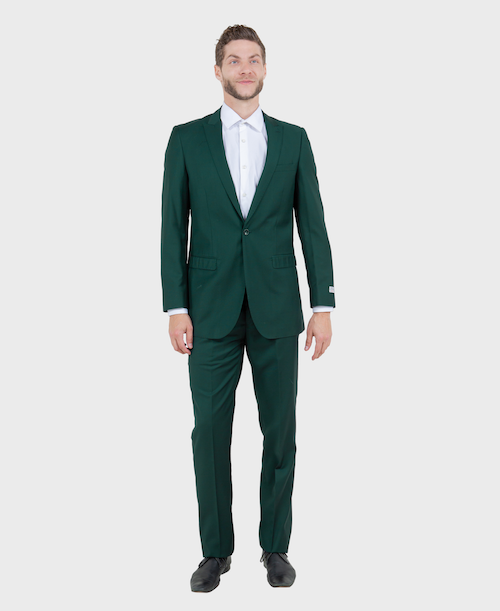
$160.00
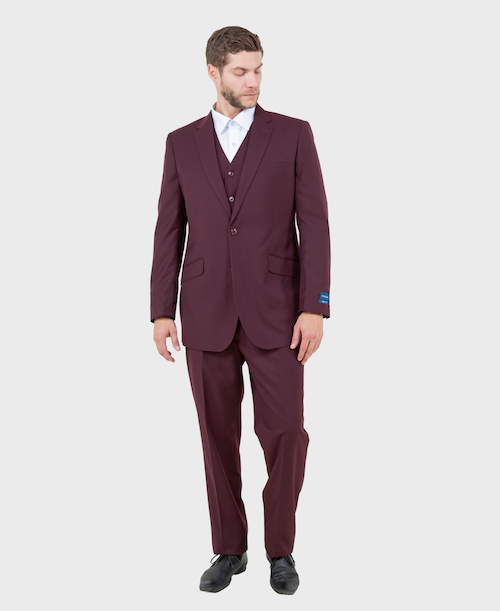
$270.00
From that time, men’s suits have evolved through the centuries as the Frock Coats of the Victorian era (1837-1901), to morning suits (which had a tail) and lounge suits, also known as dittoes (no tails). Suits moved through the Victorian era to the Edwardian era, to the roaring era of the Jazz Age, the Golden Era of Classic Menswear (1930s), the minimalist suits of the 1940s, the Ivy League suits of the 1950s to the modern bespoke suits and tuxedos of this present generation. Now, men in many parts of the world wear a sût because they purposely want to and not necessarily as a staple of their daily accoutrements. Also, modern suits are cut lighter, more comfortable, casual, brighter-colored, and textured compared to the stiffer and fuller cuts of past decades.
Frock coat vs. lounge suit
The frock coat was knee-length and fitted, worn as formal daywear through most of the Victorian era. The lounge suit was shorter, less structured, and originally considered too casual for serious business. It won anyway, and it's the direct ancestor of the suit you'd buy today.
Source: Wikipedia, "Sack suit"Declining Suit Culture

At the time suits started out in the 1800s, they were meant to be worn casually. Over time, they became part of formal wear. There was a noticeable drop in the regular habit of suit-wearing around the 1960s-1970s, but this increased again in the 1990s as it became the formal wear for corporate and business men.
Why the Decline Actually Happened
However, as you can see above, this is not the true point where things have changed. The working culture relaxed during the decades of 60s and 70s when the younger generation consciously rebelled against the look of the establishment. This was followed by the dot-com office culture which accepted business casual as the norm while tech culture took it to a whole different level where a suit signified the old guard.
However, this does not mean that the suit was no longer existent. Rather, it has simply ceased to become the go-to garment worn in every office every day. On an exciting note, there is now a widely debated counter-trend: bespoke tailoring and made-to-measure suits are also becoming popular among the young men who seek a suit more willingly and deliberately rather than do to their job.
Major Cities in the US Where Men Wearing Suits is Still the Norm, and Why

Some cities have maintained consistency in their regular culture of men wearing suits, even with the present changes in men’s fashion.
1. Washington, D. C. - Political
In this city, suits are worn as a distinct statement of power, professionalism, and authority. Suits are a staple for work and formal events.
2. New York - Financial
This city is reputed to be the home of Wall Street. Men in the corporate and financial sectors still maintain the suit culture in this city, regardless of the casual fashion trend that is prominent there.
3. Chicago - Financial and Political
For the men in Chicago, especially in the financial industry, suits are worn as an expression of power, authority, and to uphold the culture of excessive flamboyance as was obtainable in the 1980s and (although not so prominently) today.
4. Dallas, Texas- Just Because
This city is home to many wealthy ranchers and multi-millionaires who maintain the habit of wearing suits as formal clothing for their business meetings and corporate activities. These gentlemen take the wearing of suits to a higher level by making theirs a more bespoke and even colorful style.
5. Cincinnati - Corporate Culture
Men wear suits in this city today in order to express deep-seated pride in their work, confidence, professionalism, and, as a sign of respect for their clients and business associates.
Fashion has generally evolved into more casual, dynamic, and creative trends. A lot of men in many cities have discarded the daily habit of wearing suits. Notwithstanding, all around the world, men are still very much in the business of wearing suits for these reasons:
1. Formal Functions: Suits are an inevitable part of men’s wear for strictly formal and classy events like weddings, business meetings, funerals, memorials, galas, and what have you.
2. Professional: Men in industries like legal, banking, finance, and politics cannot escape wearing suits. It is a very necessary part of their appearance as it makes them exude a dependable and respectful vibe.
3. Political Respect: Suits give a man the natural aura of power, authority, and respect. Men of high status and means cannot do without them.
At the end of the day, suits are items of a man’s wardrobe that will not be going extinct anytime soon. Even though modernization has made sports coats and other more casual apparel more popular, suits are still a staple and a necessity.
Suits are Still for the Best of Men
Whether you’re within the U.S. or outside, the choice to keep wearing suits is yours to make. And if you still wear them for work or other reasons, then you should check out our collection of suits in just about every color and style. You’re just about to find your newest best suit!
Frequently Asked Questions
Who invented the modern men's suit?
Though there was no inventor, it is often thought to be Beau Brummell who created the greatest revolution towards it at the start of the nineteenth century, replacing the extravagant clothes with coats, trousers, and subdued tones.
Why did men stop wearing suits every day?
A combination of factors: the casualization of the workplace beginning in the 1960s and 1970s, the emergence of business casual culture during the dot-com boom, and the tech and startup industries associating suits with outdated corporate culture rather than with success.
Are suits making a comeback?
That is true in certain quarters. There has been significant development in bespoke tailoring among young men who view the wearing of a well-fitting suit as an investment as opposed to a uniform.
What is the difference between a frock coat and a lounge suit?
The frock coat is a fitted coat that goes down to the knee and is part of the Victorian dress code. It is considered to be formal daywear. The lounge suit is the shorter suit that replaced it.
What cities in the US still have a strong suit culture?
Washington D.C., New York, Chicago, Dallas, and Cincinnati are cities that have been mentioned on many occasions as those cities where suits are still prevalent because of their political, financial, and business sectors.
Is wearing a suit still relevant today?
Definitely, especially when it comes to formal occasions, certain types of occupations, such as legal and financial, and situations that require displaying authority or showing respect. It is not a piece of clothing used everyday anymore, but still not extinct.
Related Reading